

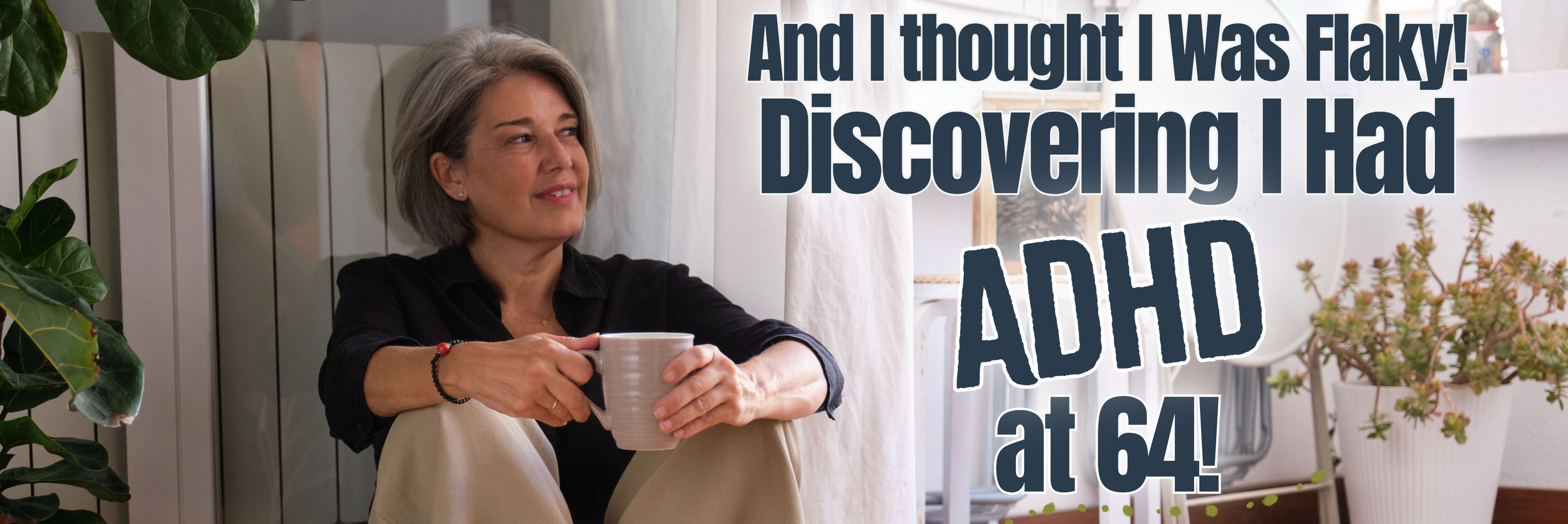
A woman shares her journey to discovering ADHD at 64 and how understanding adult ADHD helped her find self-compassion and clarity.
The patient who shared this story asked to remain anonymous, but she hopes that by telling it, others—especially adults who have struggled quietly for years—might recognize the signs sooner and find the help she wishes she had discovered earlier. Details have been adjusted slightly to protect patient privacy.
If you’d asked anyone in my family, they’d probably say I’ve always been a little “scattered.” I lose my phone every single day. I leave cabinets open, forget what I walked into a room for, and misplace my keys in the oddest places. It’s been a running joke for years.
And I laughed along because honestly, what else could I do?
But inside, I often felt overwhelmed, exhausted, and ashamed. I kept wondering…
Why can’t I just get it together like everyone else?
Sometimes I told myself I was just flaky or lazy. Other times, I got frustrated for even thinking that. It was this endless loop I couldn’t break.
The Moment Everything Clicked
Everything changed when my granddaughter was diagnosed with ADHD. I wanted to understand what she was going through, so I started reading about ADHD in children—and quickly began recognizing myself in everything I read.
Every symptom checklist felt like a mirror reflecting my life back at me. I remember sitting on my couch, heart pounding, thinking: Wait. What if this is me?
Realizing It Wasn’t Just Forgetfulness
As an adult, I figured I was just disorganized or quirky. I made endless to-do lists that I never followed. I hyper focused on projects I loved but ignored the laundry, missed appointments, and forgot birthdays.
At work and at home, I felt like I was always on the edge of falling behind. Life felt loud all the time and when I couldn’t keep up, I blamed myself.
Looking Back
When I was growing up most schools didn’t understand or test for ADHD or dyslexia. Back then, boys were far more likely than girls to be referred for ADHD testing, so it often seemed like only boys had it. Girls like me often went unnoticed. I was always daydreaming, losing my homework, missing instructions, and getting called “spacey” or “inattentive.” But because I wasn’t disruptive or unable to sit still, no one thought anything was wrong. Instead, I just heard, “You need to apply yourself more.”
Today we know much more about ADHD and that it can look very different from one person to another. I understand that ADHD often looks different in girls. it’s more likely to show up as inattention or daydreaming, not hyperactivity. That’s one big reason so many women go undiagnosed for decades. ADHD in women and adults is often less visible but no less real. People may struggle with focus, organization, or time management, yet also display incredible strengths that often go unrecognized.

Creative and Non-linear thinkers
In fact, ADHD can come with some powerful positives. Many individuals with ADHD are exceptionally creative, intuitive, energetic, and resilient. They often think in innovative and nonlinear ways, bring curiosity and passion to what excites them, and can hyperfocus deeply on projects that matter most. These traits can fuel meaningful accomplishments in both personal and professional life.
Successful and Limitless
Some well-known and successful people who have shared their ADHD journeys include:
Simone Biles, Olympic gymnast and mental health advocate
Michael Phelps, the most decorated Olympian of all time;
Shaquille O’Neal, NBA Hall of Famer
Terry Bradshaw, NFL Hall Of Famer
Mel Robbins, famed motivational speaker
Charles Schwab
Richard Branson, famous financiers and entrepreneurs
Emma Watson, actress and advocate for education and equality
Ryan Gosling, award-winning actor and producer
Justin Timberlake, famous singer and actor
Adam Levine, the front man of Maroon 5 and “The Voice” coach
And countless more. Their stories remind us that ADHD doesn’t define a person’s limitations, it can also help shape their creativity and drive.
Getting an ADHD Diagnosis
Eventually, after reading more about adult ADHD, especially in women, I scheduled an appointment with a therapist. She listened closely and suggested I get a full ADHD evaluation.
When the results came back, I was stunned. Relief and grief hit me all at once. Relief that there was finally an explanation and grief for all the years I thought I was lazy or broken.
For the first time, everything made sense.
What ADHD Looks Like for Me
My ADHD doesn’t look like the stereotypes. For me, it’s:
Always being late, no matter how hard I try
Forgetting things unless I write them down—twice
Feeling overwhelmed by clutter but not knowing where to start
Getting overstimulated by noise and chaos
Procrastinating like a champ, then pulling off last-minute miracles
Feeling “too much” or “not enough,” depending on the day
These aren’t flaws—they’re simply part of how my brain works.
Learning to Work With My Brain
Getting diagnosed didn’t fix everything overnight, but it gave me something new: self-compassion.
I’ve learned to work with my ADHD instead of against it. Therapy has helped me understand how my mind functions and how to build routines that actually support me (even if I don’t always stick to them).
I use timers, plan breaks, and most importantly, I’ve stopped calling myself lazy.
Now I ask myself, What support do I need right now?
I’m still a work in progress, but I’m learning to meet myself with kindness.

If This Sounds Like You
If This Sounds Like You
If you’re reading this and thinking, Hey, that’s me, please know you’re not alone. So many women, especially those of us over 50, have lived for decades without realizing ADHD might be part of their story.
You are not lazy. You are not broken. You are not alone.
Getting diagnosed with ADHD at 64 didn’t change who I am. It just helped me finally understand myself. And that has made all the difference.
Now I’m happy to announce we’ve added ADHD testing and diagnosis at Midwest Behavioral Clinic!
From the beginning ADHD and executive functionality therapy has been an important part of what we do, now with full testing and diagnosis available we’re can help you, your child, or loved one understand that ADHD. ADHD is not a challenge, and it doesn’t mean your broken. It’s part of a person’s unique neurodiversity, and helping you soar with your strengths, and manage your deficits is the key to unlocking and understanding how to make the most of your amazing self. Our ADHD counseling services help children, teens, and adults recognize both the obstacles and the strengths that come with ADHD. With support, awareness, and the right tools, people with ADHD can learn to harness their abilities, thrive in their daily lives, and feel more confident in who they are. If you think you might have ADHD and want someone to talk to, the team at Midwest Behavioral Clinic truly understands. I encourage you to schedule an appt. Getting assessed is a powerful first step and trust me, you’re worth it. You’re invited to contact Midwest Behavioral Clinic today to schedule an ADHD intake.
By the Midwest Behavioral Clinic Team
This blog is based on a conversation with a courageous patient who generously wanted to shared her story to help and encourage other in hope of helping others. Her name has been withheld to protect her privacy.